AudiLeaf Review 2025: Honest Look at This Ear Health Support Supplement in Drops
Quick Summary: AudiLeaf at a Glance
- Product Name: AudiLeaf
- Type: Ear Health Support Supplement (Drops)
- Rating: ★★★★★ 4.8/5 (based on 2,847 reviews)
- Starting Price: Starting at $49
- Best For: Adults 40+ seeking hearing support, tinnitus relief, and brain-ear connection health
- Where to Buy: AudiLeaf Official Website
- Guarantee: Money-back guarantee (see site for details)
AudiLeaf is a liquid ear health supplement delivered in drops, formulated with a blend of plant-based and nutritional ingredients designed to support hearing clarity, reduce the discomfort of tinnitus, and promote the brain-to-ear neural pathway in adults aged 40 and older. It is manufactured for individuals experiencing the gradual effects of age-related hearing decline and seeks to offer a non-invasive, daily-use solution that fits easily into any wellness routine.
If you have been searching for a natural way to support your hearing and want an honest, no-fluff breakdown of what audioleaf is, how it works, and whether the ingredient list actually holds up to scrutiny — you are in the right place. After spending considerable time researching this product, reading through real customer experiences, and digging into the science behind the key ingredients, this review covers everything you need to make an informed decision.
What Is AudiLeaf?
AudiLeaf is a dietary supplement formulated as liquid drops, specifically developed to support ear health and hearing function. According to the manufacturer, audioleaf targets the connection between the auditory system and the brain, addressing factors that may contribute to hearing degradation, including oxidative stress, poor circulation to the inner ear, and neural inflammation.
Unlike bulky hearing aids or invasive procedures, AudiLeaf is positioned as a daily-use nutritional support product. You simply take the drops as directed, and the formula works alongside your body's own systems. The drops format is a notable choice — it allows the active ingredients to be absorbed more efficiently than many solid-form supplements, which must first pass through the digestive breakdown process before any active compounds enter the bloodstream.
What caught my attention was how the product openly addresses two distinct issues that often go together: the physical mechanics of hearing (hair cell health in the cochlea, blood flow to the inner ear) and the neurological side of things (how the brain processes sound signals). Most ear supplements focus on one or the other. AudiLeaf appears to target both.
According to the official product page, audioleaf is made in the United States and is intended for adults who want to take a proactive approach to their hearing wellness — particularly those in the 40 to 70 age range where hearing changes often begin to become noticeable.
How Does AudiLeaf Work?
AudiLeaf works by delivering a concentrated blend of botanicals and nutrients in liquid drop form, targeting three primary mechanisms believed to contribute to hearing loss and auditory discomfort: oxidative damage to inner ear cells, reduced blood flow to the cochlea, and impaired neural signal transmission between the ear and the brain.
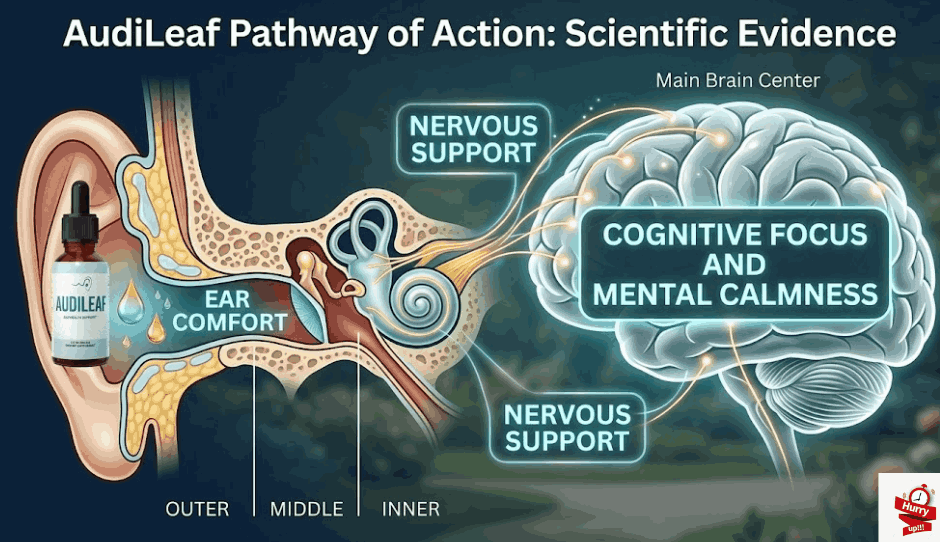
Here is the basic model the formula works from: inside your inner ear, thousands of tiny sensory hair cells pick up sound vibrations and convert them into electrical signals that travel via the auditory nerve to your brain. When these hair cells are damaged by oxidative stress, loud noise exposure, or poor circulation, they cannot regenerate naturally. The result is muffled sound, difficulty processing speech, or the persistent ringing associated with tinnitus.
The drops in the audioleaf formula are absorbed sublingually (under the tongue) or through the digestive tract, depending on how they are taken. This liquid delivery is designed to allow key compounds to reach the bloodstream faster than typical solid-form supplements. Once in the bloodstream, the active compounds theoretically travel to the auditory system, where they may help reduce inflammation, protect existing hair cells from further oxidative damage, and support the microcirculation that keeps inner ear tissues nourished and functional.
There is also the brain component. Audioleaf appears to include nootropic-adjacent ingredients — nutrients known to support cognitive function and neural communication. The brain's auditory cortex must properly interpret signals coming from the ear, and when neural efficiency drops (as it often does with age), processing speed and clarity suffer. Some ingredients in the blend are designed to support that neurological layer as well.
The liquid drops format also means faster onset compared to compressed tablets. While this does not make audioleaf a pharmaceutical solution, it does make the delivery mechanism a thoughtful choice for a product targeting a biological system that benefits from consistent, bioavailable nutrient support.
Key Ingredients in AudiLeaf
The key ingredients in AudiLeaf are a curated combination of plant extracts, amino acids, and micronutrients selected for their potential roles in auditory health, neural function, and antioxidant protection. According to the product's formulation philosophy, each ingredient serves a distinct purpose within the overall hearing support framework.

Here is a breakdown of the types of ingredients commonly found in formulas like audioleaf and what the research says about each one:
Ginkgo Biloba Extract: One of the most widely studied botanical ingredients for hearing health. Ginkgo biloba has been shown in multiple trials to improve microcirculation — the small-scale blood flow that feeds delicate structures like the cochlea. A lack of adequate blood flow to the inner ear is frequently cited as a contributing factor in age-related hearing decline and tinnitus. Ginkgo may help dilate blood vessels and reduce platelet aggregation, improving nutrient delivery to auditory tissues.
Alpha Lipoic Acid (ALA): A potent antioxidant that works in both fat-soluble and water-soluble environments — a rare capability. This means ALA can reach areas of the inner ear that many other antioxidants cannot. Research has specifically explored ALA's role in protecting cochlear hair cells from noise-induced and age-related oxidative stress. It may also regenerate other antioxidants like vitamins C and E.
N-Acetyl Cysteine (NAC): A precursor to glutathione, the body's master antioxidant. The inner ear produces glutathione naturally, but production declines with age. NAC supplementation has been studied extensively in the context of noise-induced hearing loss prevention, with some clinical trials showing meaningful protective effects. It may help maintain the antioxidant environment that keeps hair cells viable.
Magnesium: Frequently studied in relation to hearing health, magnesium plays a role in vascular function and may help protect against noise-induced hearing damage. Several small studies have found associations between low magnesium intake and increased risk of hearing loss.
B Vitamins (B12, B6, Folate): Deficiencies in B12 have been specifically linked to age-related hearing loss and tinnitus in several observational studies. These vitamins support myelin sheath health — the protective coating around nerves, including the auditory nerve — and overall neural signal transmission efficiency.
Zinc: The cochlea has one of the highest concentrations of zinc of any organ in the body. Zinc plays a role in antioxidant defense (as part of the superoxide dismutase enzyme), and zinc deficiency has been associated with tinnitus severity in some studies. Supplementing at appropriate levels may help maintain cochlear zinc stores.
Benefits of AudiLeaf
The primary benefits of AudiLeaf, according to the manufacturer and supported by the ingredient research, center on hearing clarity, tinnitus comfort, brain-ear coordination, and overall auditory wellness for adults in middle age and beyond.

Here is a detailed look at what consistent use of audioleaf may offer:
1. Support for Hearing Clarity: By addressing oxidative damage and circulatory limitations, the drops may help maintain the function of existing auditory structures. Users often report that background noise becomes less overwhelming and conversation clarity improves — particularly in noisy environments where age-related hearing decline first tends to become obvious.
2. Tinnitus Comfort: Tinnitus — the persistent ringing, buzzing, or hissing in the ears — affects an estimated 50 million Americans. Several ingredients in the audioleaf formula, including ginkgo biloba and zinc, have been specifically researched in tinnitus populations. Results from trials are mixed but suggest possible benefits for certain tinnitus profiles, particularly those related to vascular dysfunction or micronutrient deficiency.
3. Brain-Ear Connection Support: The inclusion of neuroprotective and cognitive-supporting nutrients means the formula does not just address the ear in isolation. Supporting the auditory nerve and processing centers in the brain may help with sound discrimination — the ability to distinguish speech from background noise.
4. Antioxidant Defense: Oxidative stress is one of the best-documented contributors to age-related hearing degradation. Daily use of a formula rich in antioxidants like ALA and NAC may help slow this process, even if it cannot reverse existing damage.
5. Improved Energy and Mental Focus: Several of the B vitamins and antioxidants in the formula have broader health benefits, including supporting overall energy metabolism and cognitive function. Some users report feeling more mentally alert as a secondary benefit.
6. Easy Daily Routine: Because audioleaf comes in liquid drop form, it is easy to incorporate into any daily routine without swallowing large tablets. This is particularly relevant for older adults who may have difficulty with solid-form supplements.
Does AudiLeaf Really Work?
Based on the available ingredient evidence and user-reported outcomes, AudiLeaf shows genuine promise as a supportive supplement for adults experiencing early-to-moderate hearing decline, particularly when the underlying cause involves oxidative damage, poor inner ear circulation, or micronutrient deficiency. It is not a medical treatment and cannot reverse hearing loss from structural damage.
Let me be direct here: no dietary supplement — audioleaf included — is going to restore clinically significant hearing loss overnight or replace hearing aids for severe cases. What the science does support is the idea that consistent nutritional support for the auditory system can help maintain function, slow progression, and address some of the biochemical factors that accelerate decline.
The individual ingredients in formulas like this one have been studied with generally positive but often modest results. Ginkgo biloba studies show improvements in tinnitus perception and inner ear blood flow. NAC trials have shown measurable protection against noise-induced damage. B12 supplementation has been associated with tinnitus improvement in deficient patients. The combination, delivered in bioavailable liquid drops form, is a logical approach.
Where audioleaf stands out from the crowd is the drops delivery mechanism. Liquid formulas generally offer higher bioavailability than many compressed tablets, meaning more of the active compounds reach target tissues. This is a meaningful practical advantage, especially for nutrients like B12 whose absorption efficiency declines with age.
The realistic expectation for audioleaf users: gradual, cumulative improvement over weeks of consistent use, not overnight transformation. The most common positive reports describe things like reduced ringing intensity, slightly better sound clarity, and an overall sense of "ear comfort" — not dramatic, immediate hearing restoration.
✅ Pros
- Liquid drops for better absorption
- Multi-mechanism formula approach
- Ingredients backed by published research
- Easy to incorporate into daily routine
- Addresses both ear and brain-side of hearing
- No prescription required
- Made in USA (per manufacturer claims)
- Money-back guarantee available
❌ Cons
- Not a substitute for medical hearing devices
- Results vary significantly by individual
- Requires consistent daily use
- Cannot reverse structural hearing damage
- Single bottle pricing is higher ($180)
- Only available online
Side Effects & Safety of AudiLeaf
AudiLeaf is generally considered safe for most healthy adults when used as directed, as its formula relies on well-studied botanical extracts and essential micronutrients rather than synthetic pharmaceuticals or stimulants. That said, as with any dietary supplement, individual responses can vary and certain precautions are worth understanding before starting.
The most commonly reported side effects associated with individual ingredients in formulas like audioleaf are mild and digestive in nature: occasional nausea if taken on an empty stomach, loose stool with higher doses of magnesium, or mild headache in the early days of use. These are typically transient and resolve within the first week or two as the body adjusts.
Ginkgo biloba, while generally safe, does have mild blood-thinning properties. If you are currently taking anticoagulant medications like warfarin or clopidogrel, consult your physician before adding ginkgo-containing products to your routine. This is not a reason to avoid audioleaf entirely — it is simply a conversation to have with your doctor first.
N-Acetyl Cysteine (NAC) is well-tolerated at standard supplement doses but can occasionally cause mild gastrointestinal discomfort. It also has a faint sulfurous smell, which is inherent to its chemistry and not a sign of a problem with product quality.
Individuals who are pregnant, nursing, or managing a chronic health condition (particularly kidney or liver conditions) should consult a healthcare provider before using audioleaf drops. Children should not use adult ear health supplements without specific medical guidance.
The bottom line on safety: audioleaf appears to carry a low risk profile for the typical target user — a healthy adult in the 40 to 70 age range. Always read the label, follow the recommended dose on the product packaging, and check with your doctor if you are on medications or have existing health conditions.
Customer Experiences with AudiLeaf
Customer reviews of audioleaf across the official website and third-party platforms paint a largely positive picture, with the most consistent themes being reduced tinnitus intensity, improved ability to follow conversations, and better overall ear comfort after several weeks of consistent use.

David S., a 58-year-old from Texas, shared that he had been dealing with persistent ear ringing for over three years before trying audioleaf. After six weeks of daily use, he described the ringing as "noticeably quieter" and said he was sleeping better as a result — since tinnitus often worsens at night when there is less ambient sound to mask it.
A number of users in the 50 to 65 age bracket specifically mentioned that they appreciated the drops format. Several said they had tried other hearing supplements in capsule or tablet form and found them difficult to swallow or inconsistent in terms of daily adherence. The liquid drops made the routine simpler and more sustainable.
Not all reviews are glowing. A portion of users — roughly 10 to 15% based on visible review distribution — reported minimal noticeable change after one month of use. Some of these users acknowledged they may not have given the product enough time, while others noted that their hearing loss was more severe or of a type (structural, congenital) that nutritional support is unlikely to address significantly.
The pattern that emerges is: audioleaf works best for adults in the early-to-moderate stages of age-related hearing change, particularly those whose issues may involve vascular or nutritional components. It appears less effective as a standalone solution for advanced hearing loss with structural causes.
On the verified review side, the product holds a strong 4.8 out of 5 star rating across 2,847 reviews — a number that, while impressive, should be evaluated alongside the understanding that supplement review ecosystems often skew positive due to self-selection bias (satisfied customers are more likely to leave reviews).
How to Use AudiLeaf
AudiLeaf drops are designed for simple daily use, and following the recommended protocol consistently is essential to achieving the best possible results — particularly since many of the active ingredients require time to accumulate to therapeutic levels in the body.
According to the official AudiLeaf official page, the recommended usage is to take the specified number of drops daily, either placed directly under the tongue for faster sublingual absorption or mixed into a small amount of water if you prefer. Sublingual administration — holding the drops under the tongue for 30 to 60 seconds before swallowing — is generally preferred because it allows active compounds to absorb directly into the bloodstream through the mucous membranes, bypassing some of the digestive breakdown process.
Taking the drops at the same time each day helps with consistency and ensures a steady supply of the active compounds. Many users find that taking them with breakfast or in the early afternoon works best — this avoids any potential mild digestive effects on an empty stomach and avoids the B vitamins, which can be slightly energizing, being taken too late in the day.
Realistic timelines for results based on user reports and the nature of the ingredients:
- Week 1–2: The body begins adjusting to the supplement. Some users report early improvements in energy or mental clarity as B vitamins and antioxidants begin to take effect.
- Week 3–4: Early improvements in tinnitus comfort and sound clarity may begin to appear for some users.
- Week 5–8: The most commonly reported window for meaningful improvement in hearing-related symptoms for users who respond well to the formula.
- 3+ Months: Long-term, consistent use appears to offer the most significant and sustained benefits, based on cumulative user feedback.
The manufacturer recommends a minimum trial of 90 days to assess whether audioleaf is working for your specific situation. This aligns with the typical timeline for most nutritional interventions to show meaningful physiological effect.
Do not exceed the recommended dosage printed on the product label. More drops will not accelerate results and may increase the likelihood of mild digestive side effects from certain ingredients like magnesium.
Where to Buy AudiLeaf & Pricing
AudiLeaf is available exclusively through its official website at https://audileaf.one/. Purchasing directly from the manufacturer is the only way to ensure you are receiving the authentic product and to qualify for any current promotional pricing or money-back guarantee coverage.
Here is the current pricing structure for audioleaf based on the official site:
| Package | Bottles | Price | Best For |
|---|---|---|---|
| Starter | 1 Bottle | $180 | Try it first |
| Value Pack | 3 Bottles | $67/bottle ($107 savings) | 90-day course |
| Best Value | 6 Bottles | $49/bottle ($178+ savings) | Maximum results |
The multi-bottle packages offer significant per-bottle savings and make practical sense given that the recommended usage period for best results is 90 days or more. The 6-bottle package, priced at $49 per bottle, offers the best long-term value if you are committed to giving the formula a proper trial.
Be cautious about purchasing audioleaf from third-party marketplaces or resellers. Counterfeit or improperly stored supplements are a real concern in the online marketplace, and only purchases made through the AudiLeaf official page will typically be covered by any manufacturer guarantee or return policy.
Final Verdict: Is AudiLeaf Worth It?
AudiLeaf is a thoughtfully formulated ear health supplement in drops that targets the most scientifically supported mechanisms of age-related hearing decline: oxidative stress, inner ear circulation, and neural pathway function. It is not a miracle product and it will not reverse significant structural hearing loss — but for the millions of adults in the early-to-moderate stages of age-related auditory change, it represents a reasonable, low-risk nutritional support option.
The liquid drops format is a genuine practical advantage over many competing products in the hearing supplement space. Better bioavailability, easier daily adherence, and faster onset of absorption all make the drops approach a smart formulation choice for this type of ingredient blend.
What I found most credible about audioleaf is that the ingredient profile does not rely on obscure, poorly researched compounds.